The Wheel of the Year - Holidays for Witches
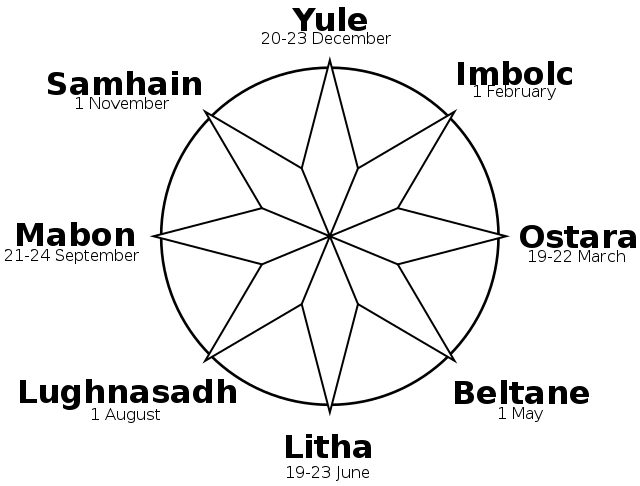
Image from Wikimedia Commons
The Wheel of the Year is an important concept in witchcraft, representing the cycle of seasons and the changing of the natural world. The eight sabbats and 13 esbats are celebrated in witchcraft communities worldwide as the most significant events in the cycle of the year. Each of these sabbats and esbats is celebrated in a unique way with specific rituals, customs, and traditions. This article explores the meaning, history, and celebration of each of the sabbats and esbats.
The Sabbats
Samhain:
Samhain, also known as Halloween or All Hallow's Eve, is the first of the four Celtic fire festivals and the beginning of the witchcraft wheel of the year. Samhain is celebrated on October 31st and marks the end of the harvest season and the beginning of winter. In the Celtic tradition, this is the time when the veil between the worlds of the living and the dead is at its thinnest. Witches believe that this is the ideal time for communication with their ancestors, spirit guides, and deities.
Witches celebrate Samhain by honoring their ancestors with feasts, candles, and offerings. They light bonfires to guide the spirits of the departed and use divination tools to communicate with them. They also perform protection spells and rituals to ward off evil spirits and negative energies.
Yule:
Yule is celebrated on the winter solstice, which falls on December 21st or 22nd. It is the time when the days are the shortest and the nights are the longest. Yule marks the rebirth of the sun and the beginning of the return of light. It is a time of renewal, hope, and new beginnings.
Witches celebrate Yule by lighting candles, burning incense, and decorating their homes with evergreens, holly, and mistletoe. They exchange gifts and share meals with family and friends. They also perform rituals to welcome the sun's return and set intentions for the upcoming year.
Imbolc:
Imbolc is celebrated on February 2nd and marks the beginning of spring. It is the time when the first signs of new life appear in nature, and the earth begins to awaken from its winter slumber. Imbolc is associated with the goddess Brigid, who is honored as the patroness of poetry, healing, and smithcraft.
Witches celebrate Imbolc by lighting candles, making offerings to Brigid, and performing rituals to welcome the return of light and fertility to the earth. They also perform purification spells to cleanse their homes and bodies of negative energies.
Ostara:
Ostara is celebrated on the spring equinox, which falls on March 20th or 21st. It is the time when day and night are of equal length, and the balance of light and darkness is restored. Ostara is associated with the goddess Eostre, who is honored as the goddess of spring, fertility, and new beginnings.
Witches celebrate Ostara by decorating their homes with flowers, eggs, and bunnies. They perform rituals to welcome the return of light and fertility to the earth, and to honor the goddess Eostre. They also plant seeds and perform spells for growth and abundance.
Beltane:
Beltane is celebrated on May 1st and marks the beginning of summer. It is the time when the earth is bursting with new life and energy, and the veil between the worlds is at its thinnest. Beltane is associated with the god and goddess, who represent the balance of masculine and feminine energies in nature.
Witches celebrate Beltane by lighting bonfires, dancing around Maypoles, and performing rituals to honor the god(s) and goddess(es). They also perform fertility spells and rituals to celebrate the abundance and growth of the earth.
Litha:
Litha is celebrated on the summer solstice, which falls on June 21st or 22nd. It is the time when the sun is at its strongest, and the days are the longest. Litha is associated with the god and goddess, who are honored as the rulers of the sun and the earth.
Witches celebrate Litha by lighting bonfires, making flower wreaths, and performing rituals to honor the god and goddess. They also perform spells for success and abundance in their lives.
Lammas:
Lammas is celebrated on August 1st and marks the beginning of the harvest season. It is the time when the first grains are harvested, and the earth begins to prepare for the coming of fall. Lammas is associated with the goddess, who is honored as the guardian of the harvest and the provider of abundance.
Witches celebrate Lammas by baking bread, making offerings to the goddess, and performing rituals to honor the harvest and the goddess. They also perform spells for prosperity and abundance.
Mabon:
Mabon is celebrated on the fall equinox, which falls on September 21st or 22nd. It is the time when day and night are of equal length, and the balance of light and darkness is restored. Mabon is associated with the god and goddess, who are honored as the rulers of the underworld and the guardians of the harvest.
Witches celebrate Mabon by making offerings to the god and goddess, decorating their homes with autumn leaves and pumpkins, and performing rituals to honor the balance of light and darkness. They also perform spells for protection and guidance during the dark winter months.
Celebrating the Sabbats
The way in which a witch celebrates the sabbats can vary greatly depending on their individual beliefs and practices. However, there are some common rituals and practices that many witches use to celebrate these sacred days.
One common practice is creating an altar for the sabbat. An altar is a space that is dedicated to the energies and intentions of the day. Witches often decorate their altar with symbols and items that represent the season, such as seasonal flowers, candles, and crystals.
Another common practice is performing a ritual to honor the energies of the day. This ritual can include casting a circle, calling upon the elements and the god and goddess, and performing spells or other forms of magick.
Witches may also celebrate by participating in a feast or sharing a meal with loved ones. This is a time to share in the abundance and blessings of the earth and honor the goddess as the provider of life.
Some witches may choose to celebrate alone, while others may gather with a coven or community to celebrate together. Either way, the focus is on connecting with the energies of the day and aligning with the natural rhythms of the earth and the cosmos.
The sabbats are an important part of the witchcraft wheel of the year. They provide a way for witches to connect with the natural cycles of the earth and the cosmos and align their energies with the energies of the universe.
Each sabbat and has its own unique history, meanings, and traditions. By celebrating these sacred days, witches can honor the god and goddess (if so desired), connect with the energies of the season, and manifest their desires and intentions.
Whether celebrating alone or with a community, the sabbats provide a way for witches to deepen their spiritual practice and connect with the universal divine.
Here is a good book on Amazon to learn more about this subject.